Introduction
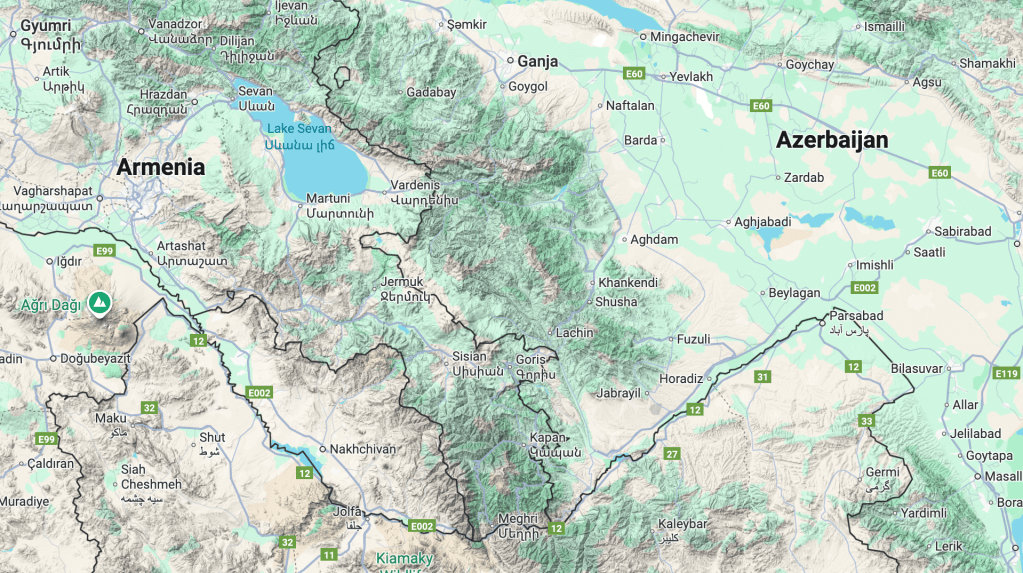
On August 8, 2025, Armenia and Azerbaijan signed a landmark U.S.-brokered peace agreement at the White House, a significant step toward resolving a conflict that has persisted for over three decades, primarily over the Nagorno-Karabakh region. Facilitated by President Donald J. Trump, the agreement not only pledges to end hostilities but also establishes the “Trump Route for International Peace and Prosperity,” a 20-mile transit corridor through Armenia’s Syunik Province connecting Azerbaijan to its Nakhchivan exclave. Hailed by Armenian Prime Minister Nikol Pashinyan and Azerbaijani President Ilham Aliyev as a historic breakthrough, the deal has positioned Trump as a central figure in South Caucasus diplomacy. However, public opinion in both nations and the deal’s geopolitical ramifications reveal both its promise and its challenges. This article analyzes Trump’s role in securing the agreement, public reactions in Armenia and Azerbaijan, and the broader implications for regional stability.
Historical Context of the Armenia-Azerbaijan Conflict
The Armenia-Azerbaijan conflict, originating in the late 1980s, centers on Nagorno-Karabakh, an ethnically Armenian region within Azerbaijan’s internationally recognized borders. The dissolution of the Soviet Union in 1991 sparked the First Nagorno-Karabakh War (1991–1994), leaving Armenia in control of the region and surrounding territories. The Second Nagorno-Karabakh War in 2020 and Azerbaijan’s 2023 offensive decisively shifted the balance, with Azerbaijan reclaiming Nagorno-Karabakh and displacing nearly 100,000 ethnic Armenians. Despite intermittent peace talks mediated by Russia, the EU, and others, issues like the status of displaced populations, territorial claims, and Azerbaijan’s demand for a corridor through Armenia’s Syunik Province (Zangezur Corridor) remained unresolved until 2025.
Trump’s Role in Facilitating the Peace Deal
President Trump’s second-term foreign policy has prioritized high-profile diplomatic wins, and the Armenia-Azerbaijan peace agreement stands as a cornerstone of this agenda. Building on groundwork laid by the Biden administration, which secured agreement on core peace principles by March 2025, Trump’s envoy Steve Witkoff tackled the contentious Zangezur Corridor issue. The resulting “Trump Route,” a U.S.-administered transit corridor, was a creative compromise: it grants Azerbaijan connectivity to Nakhchivan while preserving Armenia’s sovereignty, with the U.S. holding exclusive development rights for rail, oil, gas, and fiber optic infrastructure. Trump’s approach combined personal diplomacy with strategic incentives. The U.S. lifted restrictions on military cooperation with Azerbaijan and signed bilateral agreements with both nations to enhance cooperation in energy, trade, and technology. Trump’s direct engagement was pivotal, as he noted in a Truth Social post: “After an extensive conversation with Prime Minister Nikol Pashinyan and President Ilham Aliyev, we signed voluminous documents.” At the signing ceremony, Trump emphasized the deal’s longevity, stating, “Thirty-five years they fought and now they’re friends and they’re going to be friends a long time.” Both leaders lavished praise on Trump. Pashinyan credited his “personal engagement and resolute commitment to peace,” describing the deal as “opening a chapter of peace.” Aliyev went further, calling it a “miracle” achieved in “six months” and crediting Trump for succeeding where others failed for over 30 years. Both endorsed Trump for the Nobel Peace Prize, joining leaders from Cambodia and Israel in recognizing his diplomatic efforts. The corridor’s naming as the “Trump Route,” reportedly proposed by Armenian officials, underscores Trump’s personal investment, which he called “a great honor.”
Public Opinion in Armenia and Azerbaijan
Armenia
Public sentiment in Armenia is deeply polarized. For some, the agreement offers hope for peace after decades of loss. An Armenian woman interviewed by Radio Free Europe/Radio Liberty captured this sentiment: “I feel optimistic and have positive expectations. I’ve watched the news several times, got emotional, and cried.” Pashinyan’s claim of broad public support reflects Armenia’s growing frustration with Russia, particularly after Russian peacekeepers failed to protect ethnic Armenians in Nagorno-Karabakh in 2023. This has fueled a pro-Western shift, with many viewing U.S. mediation as a counterweight to Moscow’s declining influence. However, opposition groups and the Armenian diaspora, particularly in the U.S., have sharply criticized the deal. The Armenian National Committee of America (ANCA) condemned it for postponing discussions on the return of 150,000 displaced Armenians and the status of prisoners of war, accusing it of “rewarding Azerbaijan’s aggression.” Protests in Yerevan in May and June 2024 against related border demarcation efforts drew thousands but lost momentum, suggesting limited but vocal opposition. Critics argue the deal prioritizes economic connectivity over justice, with Azerbaijan’s occupation of over 200 square kilometers of Armenian territory fueling distrust.
Azerbaijan
In Azerbaijan, public reaction is overwhelmingly positive, amplified by state-controlled media and Aliyev’s enthusiastic endorsement. The deal is seen as a national victory, securing the Zangezur Corridor and reinforcing Azerbaijan’s 2020 and 2023 military gains. Aliyev’s statement that the agreement will be remembered “with a feeling of pride and gratitude to President Trump” resonates with a populace celebrating enhanced connectivity and economic prospects. Social media posts from the Azerbaijani presidency’s account (@presidentaz on X) highlight Aliyev’s warm reception at the White House and his promotion of the deal’s benefits. Azerbaijan’s growing defiance toward Russia, particularly after the alleged 2024 downing of an Azerbaijani passenger plane, has bolstered support for U.S.-led initiatives. The public views the Trump Route as a symbol of national strength and integration with Western markets, aligning with Azerbaijan’s broader geopolitical pivot toward Turkey and the United States.
Geopolitical Implications
The Armenia-Azerbaijan peace deal marks a significant shift in the South Caucasus, diminishing Russia’s historical influence. Armenia’s drift from the Russian-led Collective Security Treaty Organization and Azerbaijan’s alignment with Turkey and Israel have created an opening for U.S. leadership. The Trump Route positions the U.S. as a key player in a region critical for energy and trade, potentially linking Europe to Central Asia’s resources. The EU welcomed the deal, with leaders António Costa and Ursula von der Leyen calling it a step toward stability, while Turkey hailed it as a “historic opportunity.”Russia and Iran, however, have voiced strong objections. Russian Foreign Ministry spokeswoman Maria Zakharova accused the U.S. of “hijacking” the peace process, warning of a regional “security imbalance.” Iran’s concerns center on the U.S.-administered corridor near its border, reflecting fears of diminished regional influence. These reactions underscore the deal’s role in reshaping alliances, with the U.S. capitalizing on Russia’s weakened position post-Ukraine invasion.
Challenges and Limitations
Despite its promise, the deal faces significant hurdles. In Armenia, the postponement of humanitarian issues like displaced Armenians and prisoners of war risks fueling resentment, potentially destabilizing Pashinyan’s government. The Armenian diaspora’s influence in the U.S. could pressure the Trump administration to revisit these issues, complicating implementation. In Azerbaijan, the deal’s success depends on sustained U.S. investment and protection against Russian or Iranian interference. Analysts like Laurence Broers from Chatham House note that the agreement is a framework, not a comprehensive treaty, with unresolved issues like Azerbaijan’s demand for Armenian constitutional changes posing risks. Konul de Moor from the International Crisis Group highlights uncertainties around the Trump Route’s security and economic operations, which could erode public support if mismanaged. Trump’s broader peacemaking narrative, while strengthened by this deal, faces scrutiny due to unresolved conflicts like Russia-Ukraine and Israel-Hamas.
Conclusion and Policy Recommendations
The Armenia-Azerbaijan peace agreement is a testament to Trump’s ability to leverage personal diplomacy and U.S. influence to resolve entrenched conflicts. By addressing the Zangezur Corridor and capitalizing on Russia’s regional decline, Trump has secured a diplomatic triumph. However, public opinion—enthusiastic in Azerbaijan but divided in Armenia—underscores the need for careful implementation. To ensure the deal’s success, the following recommendations are proposed:
- Prioritize Humanitarian Issues: The U.S. should facilitate talks on displaced Armenians and prisoners of war to address Armenian concerns and bolster domestic support.
- Secure Economic Benefits: Transparent development of the Trump Route, with clear timelines and private sector involvement, is essential to deliver economic gains for both nations.
- Counter Regional Pushback: Engage Turkey and the EU to neutralize Russian and Iranian opposition, framing the deal as a regional economic opportunity.
- Sustain U.S. Engagement: Appoint a permanent envoy to oversee implementation and address unresolved issues, ensuring the deal evolves into a lasting peace treaty.
The Armenia-Azerbaijan peace deal highlights the potential for bold diplomacy to transform conflict zones. While Trump’s role has earned him acclaim, its long-term success hinges on addressing humanitarian concerns and sustaining U.S. commitment in a volatile region.
Sources:
- White House, “President Trump Brokers Another Historic Peace Deal,” August 8, 2025.
- Radio Free Europe/Radio Liberty, “Armenia, Azerbaijan Sign Peace Deal At White House,” August 8, 2025.
- Politico, “Trump embraces role of peacemaker in Azerbaijan and Armenia deal,” August 8, 2025.
- CBS News, “Armenia and Azerbaijan leaders join Trump to sign peace agreement at White House summit,” August 8, 2025.
- Carnegie Endowment for International Peace, “Trump Holds the Key to Armenia-Azerbaijan Peace,” July 11, 2025.
- X Post by @ANCA_DC, August 8, 2025.
 Catalyst International
Leave a comment